


Etch Marks or Dull Spots on Marble? What Acids Do and How to Prevent It

August 7, 2026

Quick Answer: A dull spot or faint ring on marble that won't wipe away or buff out is almost always an etch mark, not a stain. Marble is calcium carbonate, and everyday acids, lemon juice, wine, vinegar, tomato sauce, react with that mineral and dissolve a microscopic layer of the polished surface where they touch. The spot stays dull because the surface itself has changed shape, not because something is sitting on top of it. Sealing keeps out stains but doesn't stop this reaction, and honed marble hides the marks far better than a glossy polished finish.


You wipe down the counter after dinner and there it is: a cloudy ring where a wine glass sat, or a pale halo left behind by a squeezed lemon. You clean it again, maybe with something stronger. The mark doesn't budge. That's usually the moment a marble owner starts to worry the stone itself is ruined.


It isn't, at least not in the way you're picturing. What you're looking at is an etch mark, a small chemical burn left by an acidic liquid, and it behaves nothing like a stain. Once you understand what's actually happening on the surface, the marks stop being a mystery, and the habits that prevent them start making sense on their own.

What an Etch Mark Actually Is

Marble is a metamorphic stone made almost entirely of calcium carbonate. That mineral is soft compared to granite or quartzite, and it has one particular weakness: it reacts with acid.


Touch an acidic liquid to marble, citrus juice, wine, vinegar, tomato-based sauce, even some coffee and soda, and the acid dissolves a thin layer of calcium carbonate right where it landed. That reaction eats into the polished surface and leaves it rougher and duller than the stone around it. Light stops reflecting off that spot the way it does off the glossy areas nearby, so what you see is a cloudy patch, a faded ring, a dull halo. Nothing is sitting on top of the marble. The marble itself has changed, at a scale usually too fine to feel with a fingertip.


That's the whole reason etching trips people up. A coffee ring or a grease smear is residue on top of the stone, and residue usually scrubs off. An etch mark is a change to the stone's own surface texture. No amount of scrubbing brings back a texture that's already been dissolved away.

Why Etching Isn't the Same as a Stain

Separating these two problems matters, because the fix for one does nothing for the other.

A stain happens when liquid soaks into the pores of the stone and leaves color behind. Stains sit below the surface. Because marble is porous, sealing helps keep liquids from absorbing in the first place, and plenty of stains can eventually be drawn back out with the right poultice or cleaning approach.


Etching works differently. It's a surface-level chemical reaction that physically changes the finish of the stone at the exact spot the acid touched. There's nothing to draw out, because nothing soaked in that needs removing, the marble's own surface has been dulled. A general-purpose cleaner, even a strong one, can't fix that. Cleaners lift dirt and residue. They don't put a polished finish back where an acid already ate it away.


Some homeowners get told that sealing marble will stop these dull spots from showing up, and then find out the hard way that it won't. Sealer fills the pores below the surface to block absorption. It doesn't coat or shield the very top layer of the polish from a chemical reaction happening right on that surface. A well-sealed marble counter can still etch the first time a splash of lemon juice sits on it for a few minutes.

Common Culprits in a Typical Kitchen

Etch marks tend to show up around the same handful of everyday items once you know the pattern.


Citrus is the biggest offender, a squeezed lemon or lime wedge, a splash of juice, a marinade built around either one. Wine and vinegar aren't far behind, along with vinaigrette dressings and pickled ingredients. Tomato-based sauces and salsas carry enough acidity to leave a mark if left sitting, and so do some coffee spills and most sodas. Even certain cleaning products sold as all-purpose or glass cleaners carry acids or ammonia-based ingredients that dull marble with repeated use.


None of it needs long. A wine ring can show up in the time it takes to finish a meal. A lemon wedge left on the counter mid-recipe can leave a mark before you've even noticed the juice ran.

Warning: Skip the household glass cleaner, the all-purpose spray, anything with vinegar in it, when you're trying to remove an etch mark or clean up an acidic spill on marble. These products often contain the very acids that caused the problem, and using them on marble regularly speeds up dulling across the whole counter, not just in one spot. Reach for a cleaner labeled specifically for natural stone instead.

Honed Versus Polished: Why Some Marble Hides Etching Better

The finish on your marble changes how visible these marks turn out to be, and that's worth knowing before you decide how to live with the stone, or where to put it next.


A polished finish carries a high-gloss, mirror-like surface, which is exactly what makes an etch mark stand out. The dulled spot contrasts sharply against the shine around it because the drop in reflection is so obvious. A honed finish already sits at a matte, low-sheen level. With little to no gloss to interrupt, an etch mark on honed marble blends in far more easily, and it's often hard to spot at all unless you know exactly where to look.


That doesn't mean honed marble can't etch. The chemical reaction is identical either way. It just means the visual evidence stays far less obvious on a matte surface. That's a big part of why honed marble has become the go-to pick for busy kitchens, islands, and other high-contact surfaces where acidic spills are routine. Polished marble still earns its place on lower-traffic surfaces, bathroom vanities, accent pieces, anywhere the shine itself is the point.

Preventing Etch Marks Day to Day

Etching is one of the more preventable problems in marble ownership, since it comes down almost entirely to how fast the acid gets wiped up.


Wipe up acidic spills right away. That single habit decides whether a splash of citrus, wine, or tomato sauce leaves a mark at all. A wipe within a minute or two often stops any visible etching before it starts, while the same spill left sitting for ten or fifteen minutes is far more likely to leave a permanent dull spot behind.


Use a cutting board and a trivet for acidic prep. Slicing lemons, limes, or tomatoes straight on the marble, or setting down a pot of simmering marinara, invites contact you can avoid with a board or trivet in place.


Keep coasters within reach for wine and citrus drinks. A cocktail with citrus, a glass of wine, a soda sweating on bare marble, these are some of the most common sources of etch rings, and among the easiest to head off.


Pick the right cleaner. Stick to pH-neutral stone cleaners rather than anything acidic, and skip the vinegar-and-water mix that works fine on other counters but actively etches marble.


Think about a honed finish for the areas that see the most use. If your kitchen runs through a lot of cooking with citrus, wine, and tomato-based dishes, a honed finish makes the occasional spill far less noticeable than a high-polish surface would.


None of this means treating marble like it's fragile. It means knowing the stone has one specific weak spot, and building a few small habits around that fact.

Can an Etch Mark Be Fixed?

Because etching changes the surface texture rather than sitting on top of it, fixing it looks different from removing a stain. Very light etching can sometimes improve with a marble polishing powder and a buffing pad, which works by refinishing a thin layer of the surface to bring the sheen back. Deeper or widespread etching usually calls for professional honing and repolishing, where the surface gets mechanically reground into a uniform finish again. Sanding or scrubbing at an etch mark yourself with the wrong tools risks turning one dull spot into a bigger, uneven patch. Have a stone professional look at how deep the damage runs before you try fixing it on your own.

Understanding Marble Care for Lasting Natural Beauty

Etch marks can make marble look worn before its time, but they rarely mean the stone is permanently damaged. Knowing the difference between etching and staining, using pH-neutral cleaners, and responding quickly to acidic spills are the habits that preserve the surface for years. Honed finishes naturally disguise minor etching better than polished ones, making them a practical choice for kitchens where marble sees frequent daily use and regular food preparation.


With 25 years of experience, M&R Marble & Granite LLC has helped homeowners throughout Albuquerque, NM understand how marble responds to everyday use and why proper care matters. When the stone is maintained with the right products and realistic expectations, it continues to deliver the timeless elegance that has made marble a favorite choice for generations, despite the occasional challenges that come with this distinctive natural material.

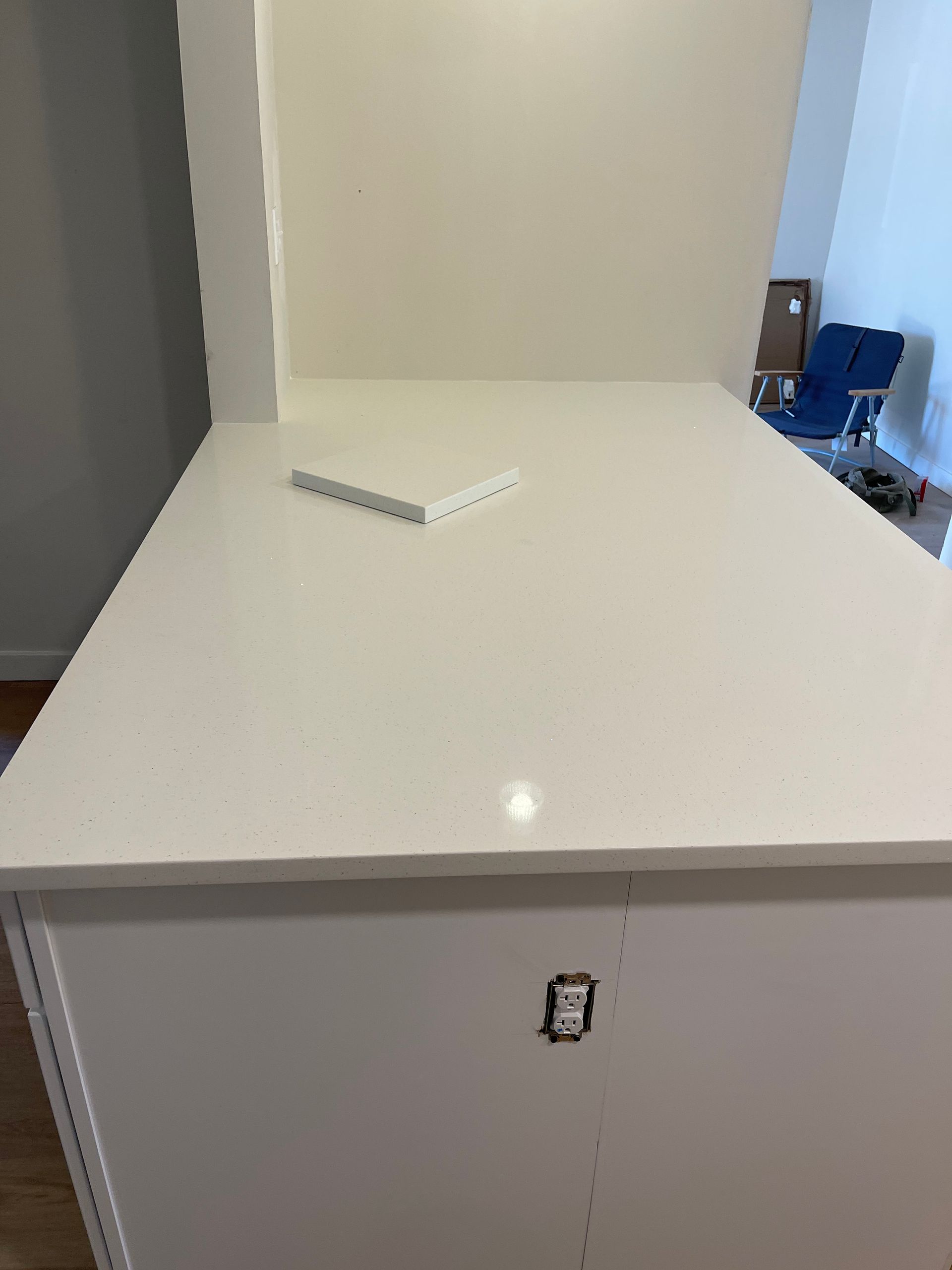
White countertop in a room with a small remote resting on it and a cabinet below.
July 4, 2026
The main countertop stone options, granite, quartz, marble, and quartzite, differ in how they're made and how they behave. Granite and quartzite are natural stones that are hard and durable; marble is natural and beautiful but softer and prone to etching and staining; quartz is engineered, very consistent, and low-main
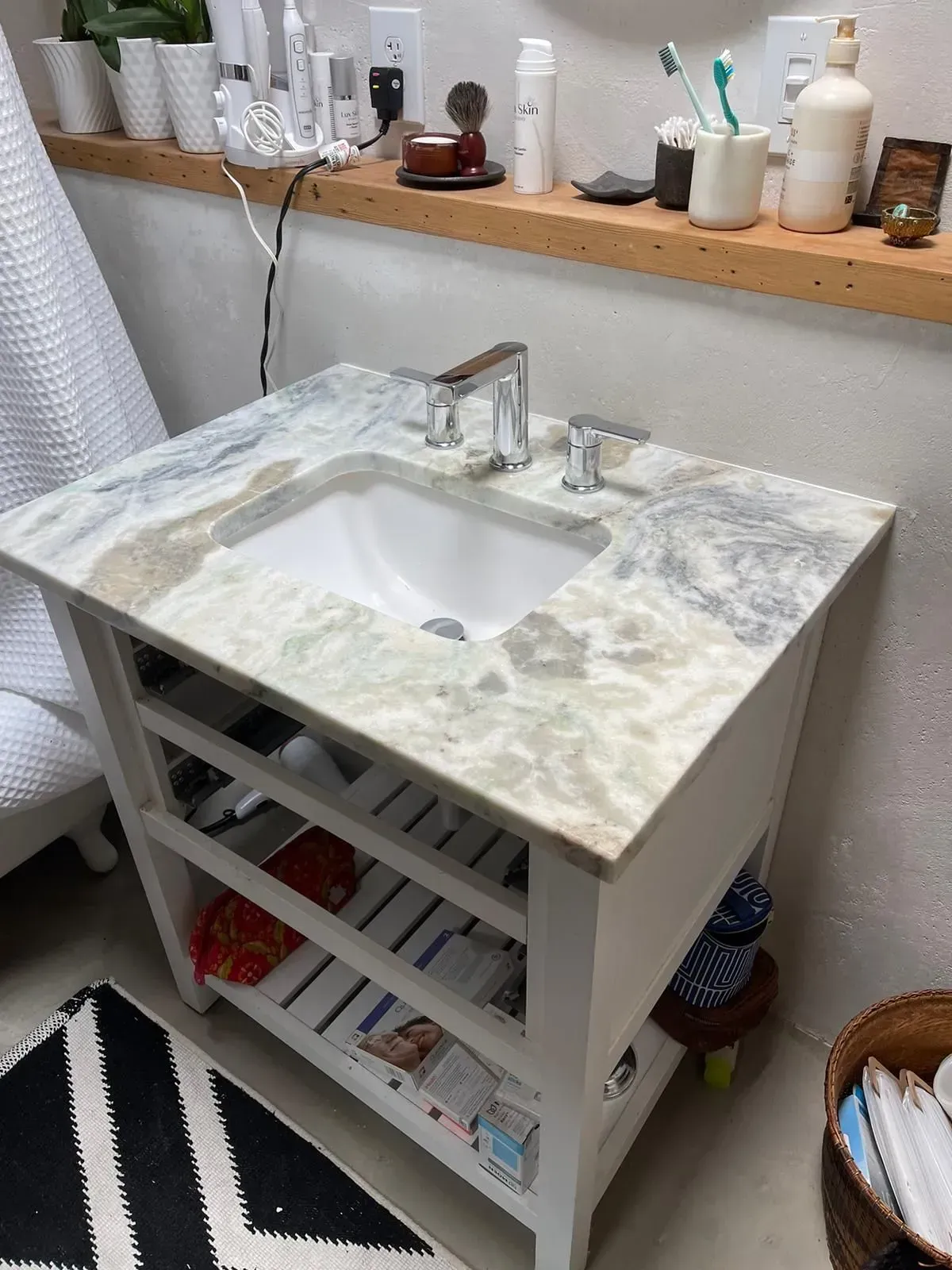
White marble bathroom vanity with sink, open shelves, and toiletries on a wooden shelf above.
June 5, 2026
Choosing the right countertop material is one of the most important decisions during a kitchen or bathroom renovation.
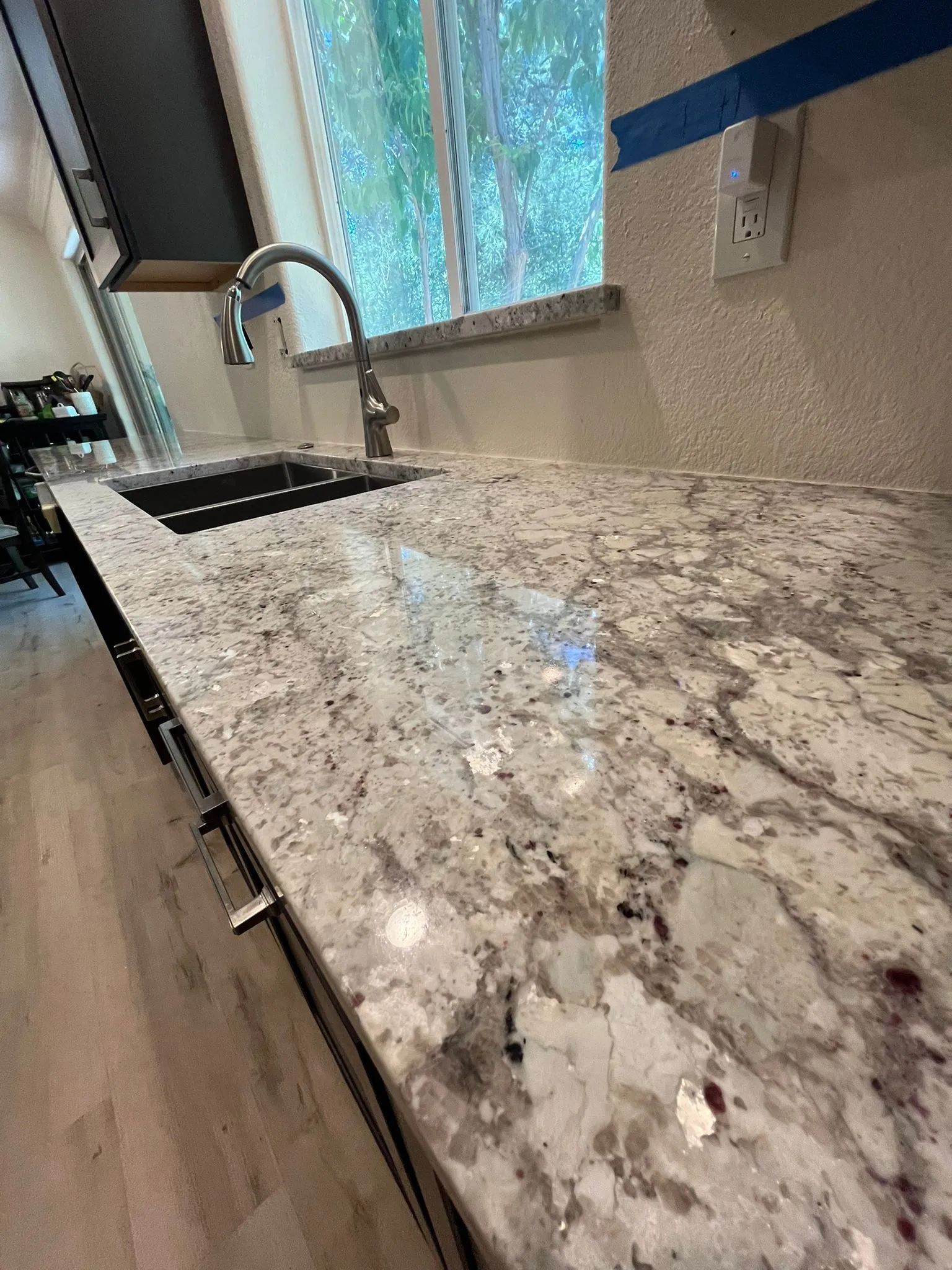
Kitchen countertop with sink and chrome faucet, featuring white-and-gray marble pattern
May 28, 2026
Granite countertops remain one of the most popular choices for kitchens and bathrooms because of their natural beauty, strength, and long-term value. Homeowners and property managers often choose granite for its resistance to heat, scratches, and everyday wear.
White countertop in a room with a small remote resting on it and a cabinet below.
July 4, 2026
The main countertop stone options, granite, quartz, marble, and quartzite, differ in how they're made and how they behave. Granite and quartzite are natural stones that are hard and durable; marble is natural and beautiful but softer and prone to etching and staining; quartz is engineered, very consistent, and low-main
White marble bathroom vanity with sink, open shelves, and toiletries on a wooden shelf above.
June 5, 2026
Choosing the right countertop material is one of the most important decisions during a kitchen or bathroom renovation.
Kitchen countertop with sink and chrome faucet, featuring white-and-gray marble pattern
May 28, 2026
Granite countertops remain one of the most popular choices for kitchens and bathrooms because of their natural beauty, strength, and long-term value. Homeowners and property managers often choose granite for its resistance to heat, scratches, and everyday wear.